Author- Apoorva Agrawal
Introduction
An estimated 1.3 billion people or 16 % of the entire global population experiences disability. According to Census 2011, India reported out of the 121 crores population, 2.68 crore persons are disabled, comprising 2.21% of the total population. However, in the past 15 years with no census, the updated numbers remain unknown.
The issue with officially registering or identifying oneself as a Person with Disability (PwD) is enmeshed in the social stigma, barriers and inequalities that affect a PwD’s both personal and professional lives. A family fears discrimination and may hide their relative’s disability, worrying about reduced marriage alliances and lack of job opportunities.
Lack of acceptance affects the disabled person’s own worldview and ability to disclose their identity, losing out on benefits and accommodations that can improve their everyday life. Disability that is not recognised at home and in the school does not get counted in the Census and therefore is not planned for or funded. This article looks at that link, from self-enumeration to early identification.
Census and Self-Enumeration
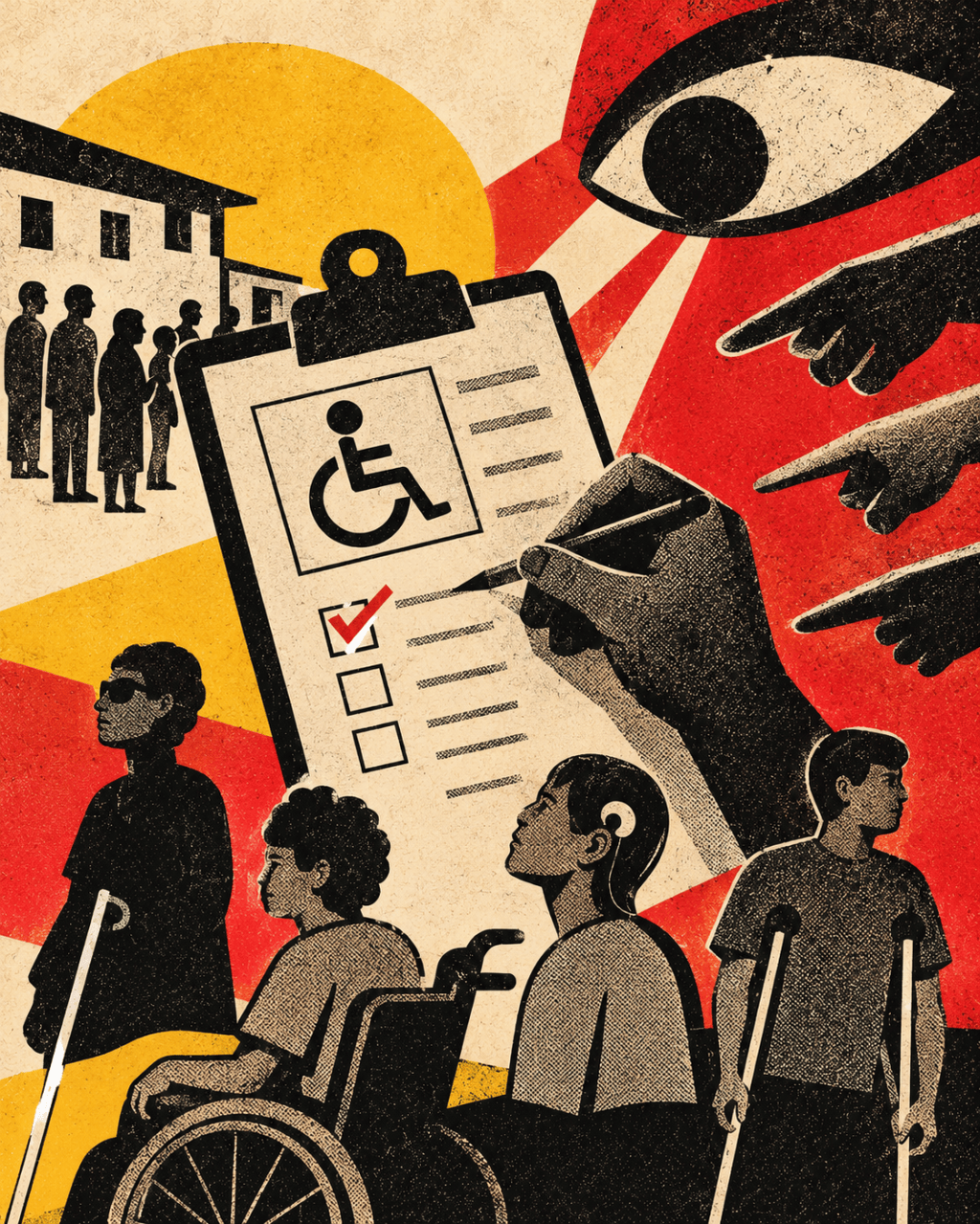
With the next Census underway, there is a new promise with self-enumeration being introduced in all states in a phased, staggered manner. While self-enumeration may be viewed by many as a logistically convenient measure, it allows persons without formal certification to also register themselves as PwDs, a hallmark of inclusion beyond the system. However, the fear of stigma, lack of agency, adverse reactions from others and a person’s own feelings of internalised ableism make the process complex. There are certain problems with the self-enumeration form itself. Under the list of 40 questions issued by the Ministry of Home Affairs, the 13th question concerns disability. While the RPwD Act 2016 saw a revision in recognising types of disability increasing from 7 to 21, the revision has failed to be properly documented in Q13 of the form. Upon choosing multiple disabilities, the form allows selection of up to 3 disabilities and has enlisted autism and intellectual disability in the same category itself, denying difference and variation within the same disability. While disability being enlisted as a question is a huge initiative towards inclusion, there is still space for sensitisation of enumerators in how to address the question in a sensitive manner. The first step is identifying and recognising disabilities in homes, institutions and then moving towards including disability in the larger societal discourse.
Early Identification, Screening and Census
In the period between 2001 to 2011, Census 2011 revealed that there was an increase in individuals with disability by 1.69%. The highest prevalence of disability was seen among children younger than 5 years of age, followed by those in the 10-19 age bracket.
Keeping in mind what Census 2011 revealed, a definite focus needs to be on early identification, screening and diagnosis of disabilities among children.
My study on “Understanding Access to Early Identification of Disabilities and Parental Counselling in Delhi Schools” recorded the lack of awareness about an enumerator visiting the household.
18/25 Parents of CWSN (Children with Special Needs) and 15/54 CWSN responded to this question. Two (6.1%) parents reported an enumerator visit and asked about the status of the student’s disability, and none of the student respondents reported an enumerator visit. However, 15 respondents (45.5%) reported that there had been no such visit and 16 (48.5%) were unable to remember. Overall, 93.9% (31/33) of the respondents did not recall or reported no such visit.
Conclusion
As we enter the second phase of Census, it is essential to understand the social dimension of disability and its impact on the enumeration process. With Delhi set to begin its next phase in January, my study highlights a gap worth considering. With 93.9 % of the respondents unable to recall or report a visit from the enumerator, strategies involving awareness about census, disability counting need to be thought of. One is for the Census to use functional questions and separate categories for conditions such as autism and intellectual disability. Second, schools and counsellors should prepare parents before enumeration begins, so that disclosure feels like access to support and not like a risk.
To be counted is the first step towards recognition, and recognition begins long before the enumerator knocks.
Apoorva Agrawal is currently a Javed-Abidi fellow on Disability at NCPEDP. Her area of intervention is “Understanding Access to Early Identification of Disabilities and Parental Counselling in Delhi Schools.” She has done her masters in sociology from JNU and bachelors from Lady Shriram College, Delhi University


Leave a Reply