Context: The Submission Call for Project Samajh
This comprehensive narrative was finalized following an open invitation for new and fresh authors featured in the project’s official call for submissions. Project Samajh, issued an invitation welcoming passionate writers, researchers, thinkers, and changemakers to contribute original, unpublished articles. Seeking well-researched and insightful pieces that inform, inspire, and create meaningful conversations, the platform highlighted specific interest areas including Public Policy and Disability.
Introduction: The Catalyst of Lived Experience
For Nikhil Undale, a 27-year-old management graduate and disability rights advocate from Pune, Maharashtra, the pursuit of higher education was less of an academic journey and more of a daily exercise in navigation. Living with low vision, Nikhil did not just study the systemic gaps in India’s education sector; he lived them.
Throughout his graduation, the barriers were constant and compounding. There were digital resources that screen readers couldn’t parse, a pervasive lack of awareness around assistive technologies, and a frustrating silence regarding institutional support systems. Like thousands of students with disabilities across India, Nikhil found himself stranded in a paradox: progressive legal frameworks existed on paper, but the actual classrooms remained functionally out of reach.
Rather than accepting exclusion as an inevitability, Nikhil chose to use it as a baseline for systemic inquiry. After completing his graduation and dedicating two years to competitive exam preparation, he pursued an MBA. It was during this time that he stepped into a pivotal arena of advocacy, securing the prestigious NCPEDP–Javed Abidi Fellowship on Disability. The fellowship offered the precise toolkit he needed to transform personal frustration into rigorous, evidence-based social change.
Returning to Pune, widely celebrated as the educational hub of Maharashtra, Nikhil launched a comprehensive study titled “Needs of Persons with Disabilities in Higher Education Institutions in Pune.” Using a mixed-method research approach, he went beyond mere data collection to capture the human cost of institutional neglect. He gathered a total of 202 students and alumni for a deep-dive quantitative survey, while simultaneously conducting in-depth qualitative interviews with students, faculty members, institutional heads, and disability sector stakeholders to capture a 360-degree view of the campus ecosystem.
The findings laid bare a stark disconnect between national policy—such as the Rights of Persons with Disabilities (RPwD) Act 2016, the National Education Policy (NEP) 2020, and the UGC Accessibility Guidelines—and the day-to-day reality on the ground. Nearly 70 percent of respondents routinely faced physical and digital barriers. On campus, students wrestled with a severe physical infrastructure gap, marked by the absence of ramps, lifts, tactile paths, and accessible washrooms. In the digital space, the isolation continued with inaccessible university websites, non-accessible study materials, and a complete lack of technical support for assistive devices. More alarmingly, the study documented a profound psychological toll: widespread feelings of isolation, reduced participation, and stunted personal growth among students with disabilities.
For Nikhil, the conclusion was definitive: accessibility is not a series of logistical accommodations or retrofitted infrastructure projects. It is a fundamental matter of equal opportunity, human dignity, and social justice. His trajectory, from a student navigating inaccessible digital resources to the lead researcher of one of Pune’s largest data-driven disability studies, exemplifies the power of lived experience in policy advocacy. Today, his work stands as both a mirror to the shortcomings of higher education institutions and a practical roadmap for reform, ensuring that the voices of students with disabilities are no longer missing from the decision-making tables of Indian academia.
The Writeup:
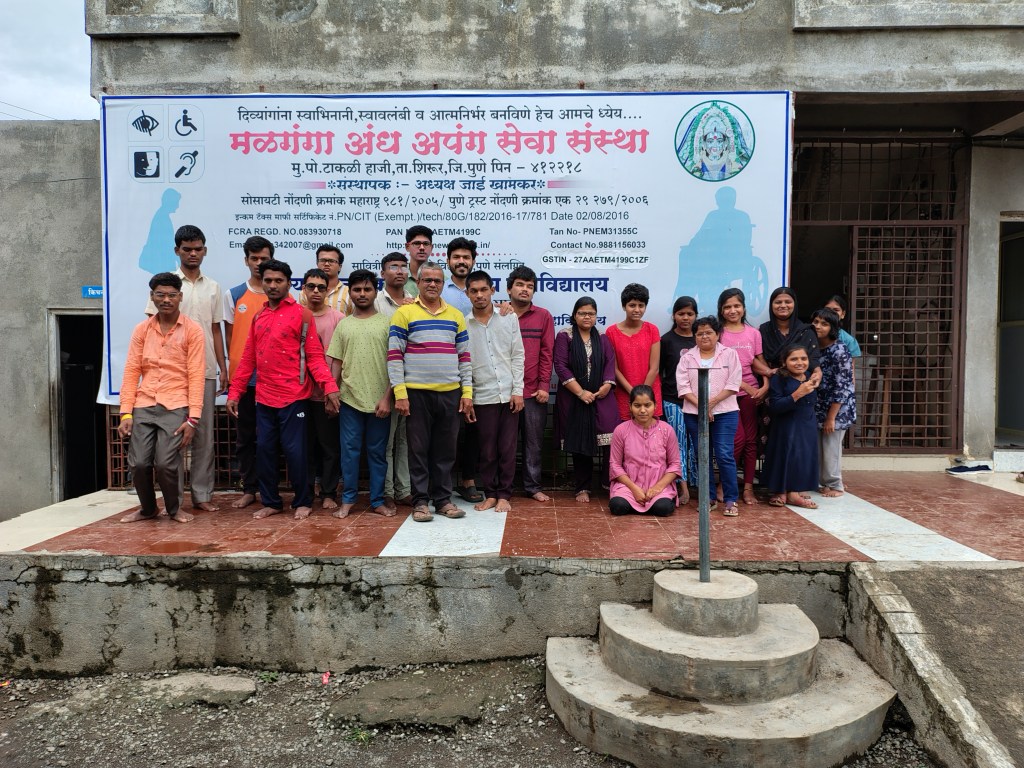
Abhay Holkar, a 20-year-old student from Ahilyanagar, Maharashtra, lives with locomotor disability and dreams of becoming a teacher. But his journey to his goal has been shaped not by ambition, but by exclusion. When he applied to a college for his D.Ed., he was denied admission, not due to merit, but because the college lacked basic accessibility like ramps, lifts, and navigable pathways. “They told me they couldn’t admit me because of my disability,” he recalls. The rejection deeply affected his mental health, pushing him into depression. Eventually, with support from friends, he completed his D.Ed. externally and later joined a college in Shirur that provided accessible infrastructure and a supportive environment.
Holkar’s experience highlights how the absence of basic facilities can determine not just access to education, but to dignity and independence itself. Unfortunately, his is not an isolated case. A study of 202 students with disabilities across higher education institutions reveals systemic challenges.
- Nearly 70% face barriers in physical and digital accessibility.
- Around 47% reported lack of ramps and lifts.
- 45.5% highlighted the absence of signage and tactile paths.
- More than a third of those surveyed, 35%, struggle to access classrooms.
- 33.7% reported inaccessible washrooms.
- These challenges continue into the digital space.
- 56.4% face inaccessible websites.
- 48% lack technical support for assistive devices.
- 47% encounter videos without captions.
- 60% reported challenges in curriculum and learning.
- Only 65% were aware of institutional measures available to them.
Alarmingly, nearly 4 out of 5 students lack awareness about provisions under the RPwD Act, 2016 and institutional support systems like Equal Opportunity Cells. Half of the students reported feeling excluded due to these barriers, impacting their mental health. Despite raising concerns, many students reported no action being taken or were unsure where to approach.
These lived experiences and findings point to a huge gap between policy and implementation. While India has strong frameworks like the RPwD Act, 2016, UGC Accessibility Guidelines (2022), and NEP 2020, their impact remains limited due to weak enforcement, lack of accessibility audits, and poor accountability mechanisms.
Data from the All India Survey on Higher Education 2021–22 (AISHE) issued by the Ministry of Education further highlights this exclusion. Out of over 4 crore students in higher education, only 0.2% are students with disabilities. This raises critical questions: Why are students still being denied admission due to inaccessibility despite reservation policies? Why are Institutions still Inaccessible for cross-disability Students? Why does inclusion depend on individual institutions rather than a system-wide guarantee? Addressing these gaps is not just about infrastructure; it is about ensuring equal opportunity, dignity, and the right to education for all.
Nikhil Undale,
Researcher and Disability Advocate


Leave a Reply