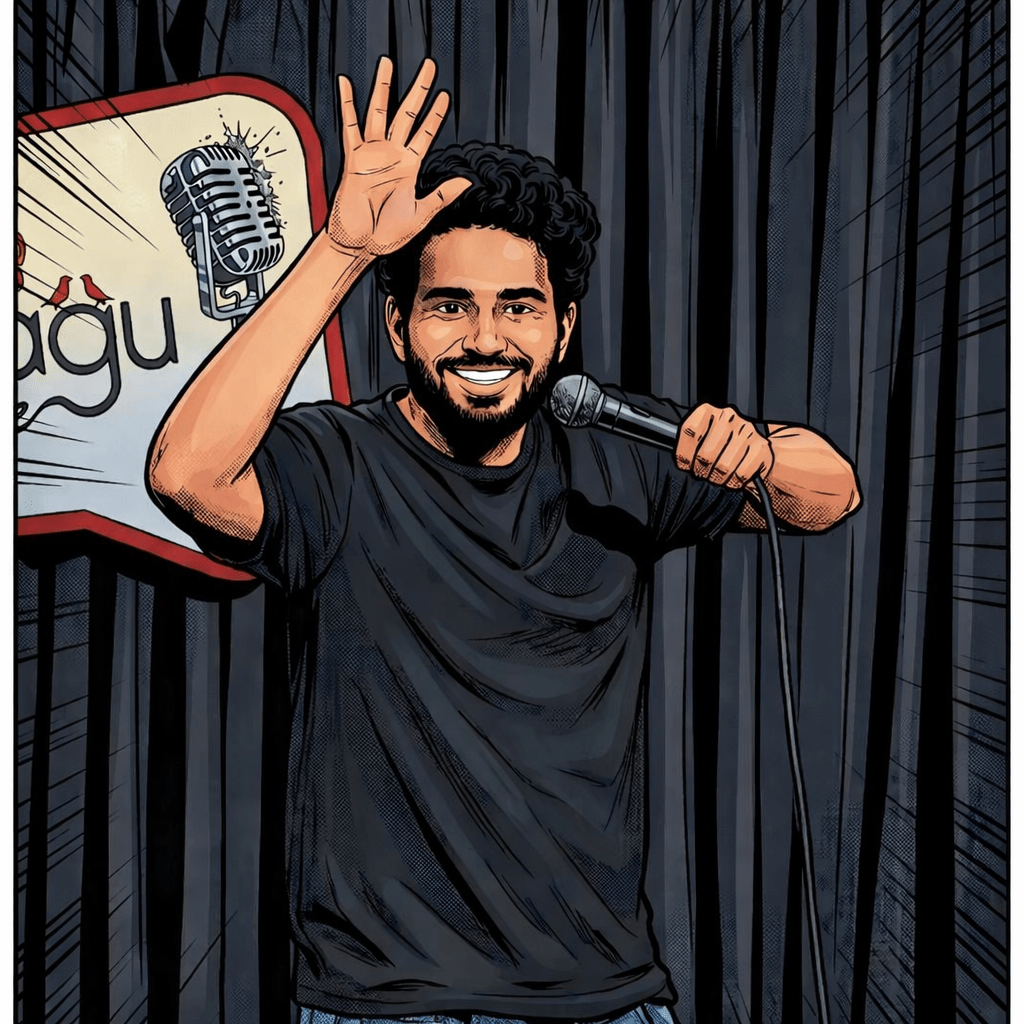
I have been following the comedy scene in India since 2012, when AIB and TVF were ruling the roost. New age writing, experimentation with new formats, challenging boundaries. Within this new environment, there was a bunch of new-age stand-up comics, which were leagues apart from the likes of Raju Shrivastava and Kapil Sharma, and signalled a generational shift. From comedy rooted in eastern aesthetics and morality, it became an increasingly a Western influenced artform.
Samay Raina has been a much later discovery. I knew him earlier from Comicstan as a cute comedian from Kashmir. 2-3 years ago, I used to come across bits and pieces of his livestream from chess streams. Then there came the phase where he became popular for his dark comedy. It didn’t draw my attention beyond a point. Then came ‘India’s Got Latent’, which was the Indian rendition of ‘Kill Tony’. I was immediately hooked from the first episode. What stood out was not the jokes cracked, which apparently became the highlight of the show, but the sense of bonhomie it created with contestants and the panelists, which had elements of honesty, vulnerability, rawness, humor, and a feeling of wholesome sense of community, which was unprecedented in the Indian comedy scene. It pushed boundaries and brought new energy to a more confined comic setup that had become structurally restricted.
Another aspect I would like to talk about is the depiction of disability in Latent Show, which became one of the primary causes of controversy, FIRs, and court cases.
Indeed, some of the jokes cracked by the participants and panelists on disability were problematic, but that’s a very surface-level understanding of what is actually happening.
To explain it, let me ask a very simple question: What is the true meaning of inclusion?
Does it mean being politically correct all the time when you see a person with disability, that you play safe and make sure that you treat them with extra care, so that they do not feel potentially offended. In some places and times, maybe. But does that apply to a comedy club where you willingly suspend the veneer of political correctness? You expect something that challenges your belief system and makes you laugh.
Also, I believe inclusion is a sugarcoated term, which indirectly positions a particular community at the periphery of the supposed mainstream, which has a particular value system, and then tries to accommodate the community, which often comes from a position of power and inclusion tries to pacify the situation without acknowleging the power dynamics.
In the latent show, I didn’t see this kind of perceived victimhood, where disabled participants got the spotlight, not because of their disability, but due to the simple fact that they were funny without the facade of sympathy.
At a deeper level, no one likes to feel excluded and then included as a compromise, if they are not truly valued for what they bring to the table. This the difference between inclusion and acceptance.
Coming back to Samay, his approach to comedy is quite straightforward, where his philosophy of dark comedy or shock comedy comes in. When you make fun of the most vulnerable aspect of your being, it liberates you. At the outset, it might look like an insult or even dehumanising, but deep down it liberates the performer, and by that extension, the audience as well, because it is coming from a point of liberation and not suppression, which distinguishes Samay from the comedians attempting to do similar genres of comedy. It is a tricky fine line that most comedians fail to understand.
Then there is a whole other dimension of how it influences the audience. Samay’s audience base has seen a surge across every age group from different fields. Initially, his jokes were straight out of street jokes (some of them were copied), with a very tight delivery, which eventually is his USP, but it did not necessarily follow a storyline or cohesive narrative, which reflected in his audience base, which was quite shallow, coming from a younger age bracket. But his livestreams in the COVID period truly expanded his audience base. Latent made him a household name as he anchored the spirit of the show with uncanny ease. He achieved a rare feat on the Indian YouTube. No community or age group felt alienated from the show; although it was meant to be consumed privately, it became a community affair.
When the controversy broke out, it almost felt to me that something personal to me was out there for public scrutiny. Not that, I was in sync with everything which were said in the show, but the fact it came from an honest place and had no pretension. Something in me felt comforted by its existence.
In his latest stand-up special, ‘Still Alive,’ Samay achieved something that was missing in his comedy arc: a cohesive narrative with an emotional appeal. It was evident later on in the podcasts where he admitted that his writing in the latest special came from the place of silence, and not from the place of chaos, which was the case in the earlier specials.
I will admit that his social position brings a certain amount of privilege and naturally positions him closer to the politics of the ruling dispensation, but what interests me is that he chose to evolve after the incident rather than being the same old brat who panders to the audience just to get a cheap laugh. In a society where the individual is subject to constant moral judgement fo its action, it’s necessary that society allows certain safety valve to vent out their frustration, and comedy is the most harmless drug that relieves people from the crisis of isolation of current times.


Leave a Reply