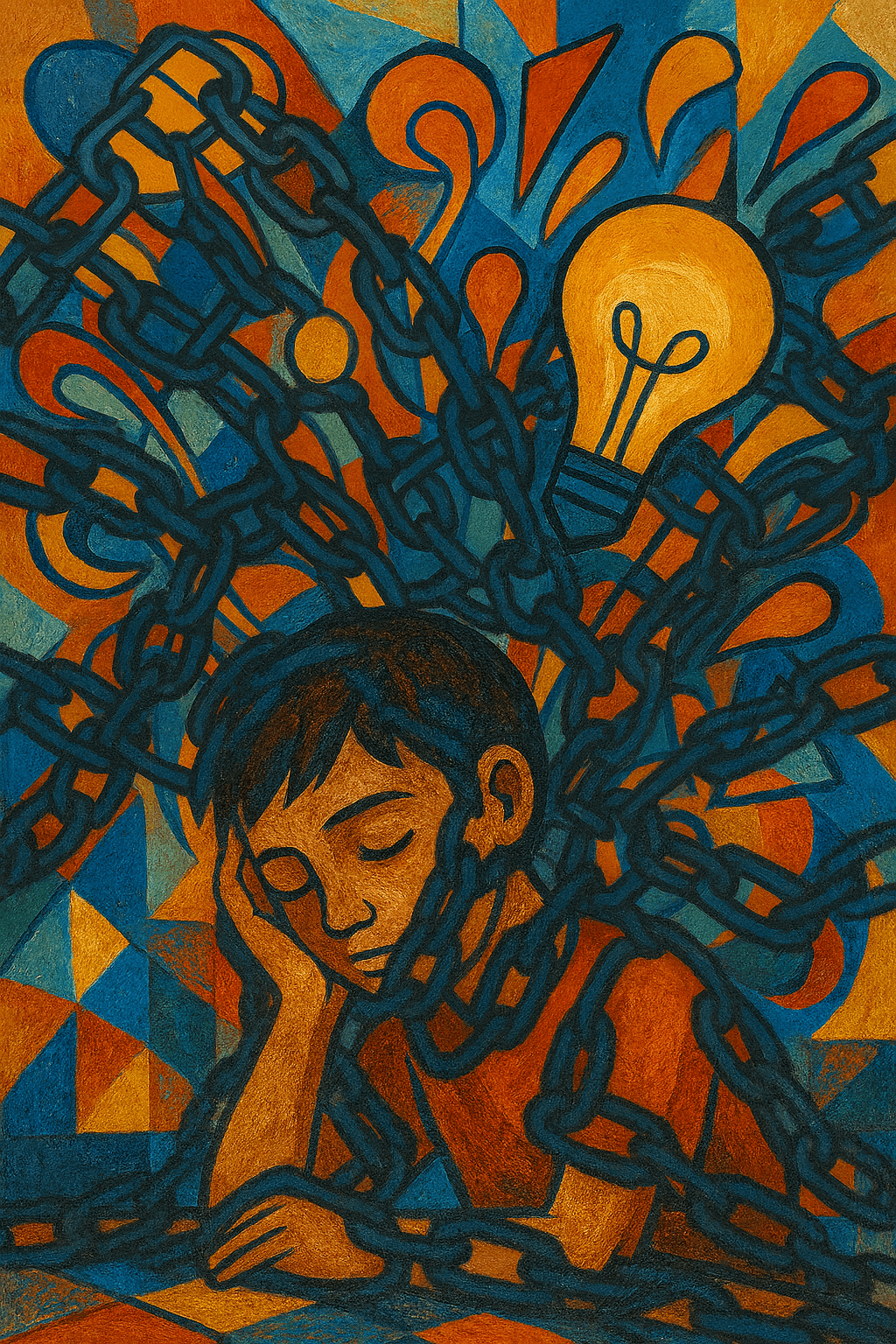
We all see such people in our surroundings who put up a brilliant act of being well read, well researched, and well behaved. To be honest, we all act in some way and form to fit into a structure for the validation from others and the like, but from inside we know it’s not authentic and it’s not coming from a point of genuineness but is forced. My point is that though such acts keep us disciplined and focused, steadily and gradually they deplete our creative instincts, and we begin to become like a copy of others. We begin to become a repetition of something which is already there.
But if we enquire deeply, in the grand scheme of things, nothing is original in its truest sense. In the realm of human experience, every original idea is an inspiration that already exists in nature. So what’s the distinction and what is the fuss about?
The distinction lies in agency and ownership.
Every thought and idea is a repackaging of experience which was already there, but the question is how one arrives at the idea and thereafter how it is delivered to the outside world. The whole game lies in delivery and who’s taking the shot. The person who has an idea has to select a medium, and depending on the resources and willingness, if they choose a pre-existing medium which is not their own, they have to go through the filter of the medium determined by the owner or the group of creatives hired by the owner, which has its own agenda. In the process, the original which was conceived by the creator gets curated, sanitised, and fit into the larger agenda of the medium.
Therefore, it is the responsibility of the creator to be careful while choosing the medium as to whether the medium is aligned to their objective and vision or not, if they care about the ownership and the authenticity of the idea. In this case, agency and ownership remain intact. But it depends on the intention of the creator. In case the intention is to reach an audience with pre-existing structure and incentives, then it is on the creator to fit into the norms and structure of the medium.
One can still remain creative while bound to structure, but it depends on the owner of the agency and the structural dynamics created by the owner. If that is not the case, then every creation becomes a product of predetermined rigid structure which functions solely on incentives rather than creativity, which can only survive when structure is designed to incentivise difference, deviation, and even mistakes. It is the bare minimum for creativity to survive.
But a medium which is dependent on incentives for sustenance in the short run, or in a burden of its legacy and predefined audience, can never sustain creativity. Creativity demands the breaking of structure and challenging norms. Therefore, for a creator to be really creative, they have to make sure that they keep on deviating and challenging themselves and ensure that they are in control of structure rather than being controlled by the structure of the medium.
In the process, one has to challenge the structure, create alternative and competing structures, and be comfortable with isolation and rejection rather than seeking validation and compliance, which give comfort and acceptance in the larger scheme of things but kill creativity and a sense of purpose in life.
In essence, it is necessary for the creator to understand that creativity is deeply personal if it has to be authentic and then it will possibly reach an audience which truly relates and values the creation.


 Project Samajh
Leave a comment